The first time I tried doing pull-ups at home, I thought the bar was the problem. Then I realized it was actually my height.
My knees kept creeping toward my chest; there wasn’t quite enough room to hang comfortably, and what should have been a simple exercise quickly became an exercise in awkward positioning.
That’s when I started looking into pull-up bars designed with taller users in mind.
Finding the best pull up bar for tall people takes a little more thought than picking the highest-rated bar online. The right setup needs enough clearance, a suitable mounting height, and a comfortable grip without compromising stability.
This guide looks at those details along with some solid options for making pull-ups more comfortable at home.
5 Best Pull Up Bars for Tall People: Our Top Picks
| Pull-Up Bar | Height / Adjustment | Weight Capacity | Best For | Buy |
|---|---|---|---|---|
| SPORTSROYALS Power Tower | 57.09–83.07 in | 360 lb | Best Overall | Check on Amazon |
| RELIFE Power Tower | 9 height settings | 400 lb | Adjustable Setup | Check on Amazon |
| SERTT Foldable Power Tower | 10 height settings | 440 lb | Small Spaces | Check on Amazon |
| KT Toes Don’t Touch Ground | Up to 101.57 in | 770 lb | Very Tall Users | Check on Amazon |
| Sportneer Doorway Pull-Up Bar | 29.5–37 in width | 297 lb | Doorway Setup | Check on Amazon |
Not every pull-up bar is built with taller users in mind.
These options stand out for their combination of clearance, sturdy construction, and thoughtful designs that can make a noticeable difference during regular workouts.
1. SPORTSROYALS Free Standing Pull Up Bar
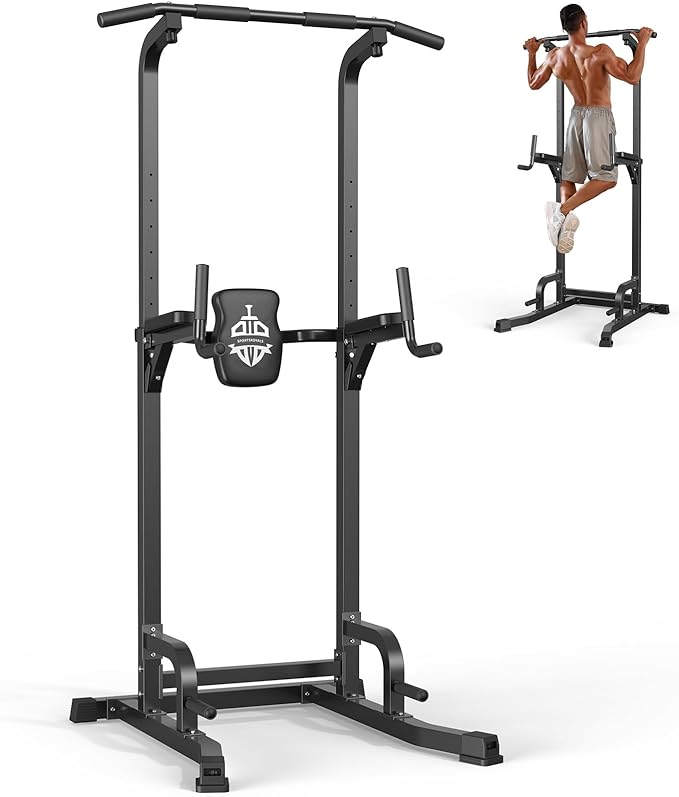
The SPORTSROYALS Power Tower feels like one of those pieces of equipment that can replace several machines in a home gym.
What stood out most was the solid feel of the commercial-grade steel and the wide Π-shaped base, which gave the station a reassuring level of stability during pull-ups, dips, and leg raises.
The height adjustment is especially useful for taller users, with eight levels ranging from 57.09 to 83.07 inches, making it easier to find a comfortable setup.
The padded backrest and angled armrests also add a nice touch of comfort during leg raises and dip exercises. The non-slip grips feel practical for longer sessions too.
With 10 exercise functions packed into a relatively compact design, this is a versatile choice for anyone building a full-body strength routine at home.
2. RELIFE REBUILD YOUR LIFE Pull Up Bar

The RELIFE REBUILD YOUR LIFE Power Tower feels sturdy enough for regular home workouts without taking over the room.
During testing, the reinforced steel frame and four suction cups helped keep the tower planted while moving between pull-ups, dips, and knee raises. The 400-pound weight capacity also makes it a reassuring option for strength-focused training.
I particularly liked the range of adjustment. With nine height settings, it is easier to find a comfortable pull-up position, which can be especially helpful for taller users.
The three-level adjustable handles and four backrest positions add another layer of flexibility for different exercises and body types.
It also supports bodyweight rows and push-ups, so there is plenty of variety for a full-body routine.
Assembly is relatively straightforward, and the compact footprint works well in smaller home gyms.
3. SERTT Foldable Power Tower Dip Station

The SERTT Foldable Power Tower makes a strong case for a home gym where space is at a premium.
The triangular base feels noticeably more substantial than many compact pull-up stands, while the foldable design makes it much easier to tuck away after a workout.
The 39.4-inch width is another welcome touch, leaving plenty of room for pull-ups, dips, and knee raises without feeling boxed in.
For taller users, the 10 adjustable pull-up heights are particularly useful for finding a comfortable setup.
The five grip options add variety too, especially when switching between wider and neutral-grip movements.
I also liked the tool-free dip and push-up handle adjustment, which makes changing positions quick and hassle-free.
With 2mm thick steel tubing and a 440-pound capacity, it feels built for demanding bodyweight workouts rather than occasional use.
Overall, it’s a versatile option that combines stability, adjustability, and easy storage.
4. KT TOES DON’T TOUCH GROUND Foldable Pull Up Bar

The KT TOES DON’T TOUCH GROUND Pull Up Bar stands out immediately for its unusually tall adjustment range.
With settings reaching 101.57 inches, it offers plenty of room for taller users to hang, stretch, and move without feeling cramped.
I also liked the generous 39.37-inch bar width, which leaves enough space for different grip positions and more dynamic movements.
The aluminum construction is another pleasant surprise. At just 26.45 pounds, the stand is much easier to move around than a typical heavy steel power tower, yet it supports a substantial load. The folding mechanism is especially convenient when floor space is limited.
What makes this model particularly interesting for tall users is the combination of height, wide clearance, and portability. It feels designed for more than basic pull-ups, with enough flexibility for chin-ups, kipping movements, and other calisthenics exercises.
5. Sportneer Pull Up Bar for Doorway

The Sportneer Doorway Pull Up Bar is a good reminder that a solid pull-up setup doesn’t always need a bulky power tower.
Its no-drill design makes installation relatively straightforward, while the dual gear locks and large anti-slip pads help it stay firmly in place.
I especially liked the integrated cotton grip, which feels more comfortable than narrow foam handles during longer sets.
For a doorway bar, the 29.5- to 37-inch adjustment range is useful, although checking the frame width before installation is essential.
The setup also has built-in spirit levels and clear alignment markers, which make getting the bar positioned correctly much easier.
The one limitation for taller users is that doorway bars naturally provide less vertical clearance than a freestanding station.
Still, within a suitable doorway, this is a sturdy, compact option for pull-ups, chin-ups, stretching, and other home exercises. If a doorway setup still makes the most sense for your space, compare our best pull-up bars for doorways for more compact options.
What Height Pull-Up Bar Do Tall People Need?
For tall users, the goal is to find a pull-up bar that allows as much of a full dead hang as your space permits without your feet constantly touching the floor.
Your height alone doesn’t determine the ideal bar height because arm length, reach and ceiling clearance also matter.
A 6’2″ and a 6’5″ person can have different standing reaches, so measuring your own reach is more useful than choosing a bar based only on height.
Stand upright, extend your arms overhead and measure from the floor to your fingertips.
Compare that measurement with the bar’s maximum height and your available ceiling clearance before buying.
How to Choose the Best Pull Up Bar for Tall People
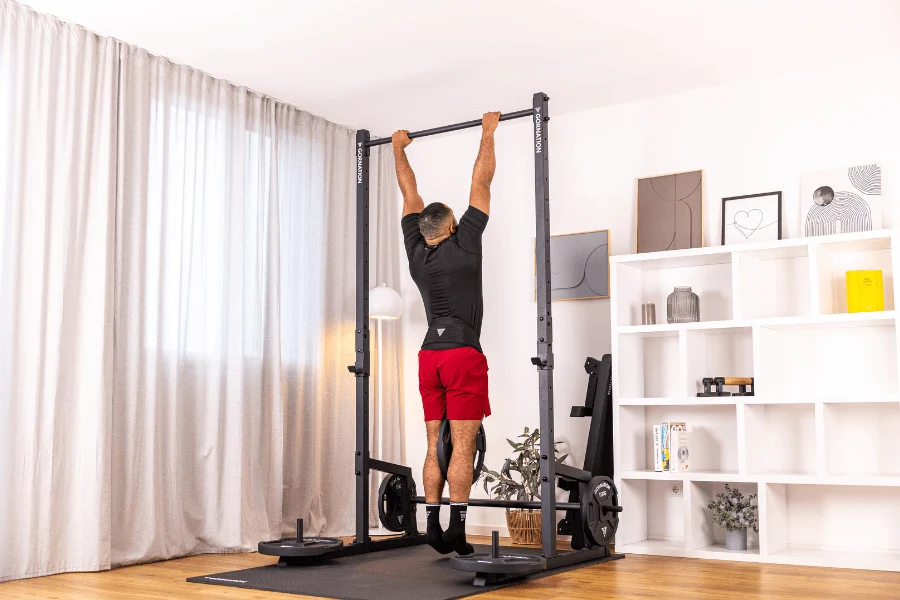
Shopping for a pull-up bar gets a little more complicated when height is a factor. A setup that works perfectly for a shorter user can leave a taller person with bent knees, limited range of motion, or an uncomfortable starting position. A few practical details can make the search much easier.
- Check the Height and Clearance
This is the first thing worth checking. A bar should allow enough room for a full hang without the feet constantly touching the floor. Freestanding models with adjustable heights generally offer more flexibility, while doorway bars can be limited by the height of the frame and ceiling.
- Look for a Wide, Open Design
Extra width and clearance can make pull-ups feel much less cramped. A wider frame gives the legs and shoulders more room to move, which is particularly helpful for taller users and anyone doing chin-ups, knee raises, or more dynamic exercises.
Tall users with a dedicated workout area may also want to consider a wall-mounted pull-up bar, which can provide more freedom in choosing the mounting height.
- Consider Adjustability
Height-adjustable bars are especially useful when a single piece of equipment needs to accommodate different people. A model with several height settings makes it easier to find a comfortable position without compromising form.
- Pay Attention to Stability
A tall-friendly design still needs to feel secure. Look for sturdy steel or aluminum construction, a broad base, non-slip feet, locking mechanisms, or other features designed to prevent movement during exercise. Weight capacity matters too, but stability depends on the overall design rather than that number alone.
- Think About the Workout Style
Basic pull-ups require less space than kipping pull-ups, muscle-ups, or other calisthenics movements. A compact doorway bar may work well for controlled exercises, while a freestanding tower with greater clearance is generally more practical for dynamic training.
- Measure the Space First
Before buying, measure the available floor area, doorway width, and ceiling height. This is particularly important for taller users because a bar that technically fits may still leave insufficient room for a comfortable full range of motion.
- Don’t Overlook Grip Design
Multiple grip positions can add variety while reducing repetitive strain from always using the same hand position. Wider, neutral, and angled grips can also make the bar more comfortable depending on the exercise and individual preference.
Ultimately, the best pull-up bar for tall people is one that provides enough clearance, feels stable under load, and fits naturally into the available workout space. Getting those basics right matters more than having a long list of extra features.
Frequently Asked Questions
What is the best pull-up bar for tall people?
The best option is an adjustable pull-up bar that provides enough height for a full dead hang without your feet touching the floor.
How high should a pull-up bar be for a tall person?
It should be high enough to allow a dead hang with straight legs or minimal knee bending. Measure your standing reach before choosing the height.
What height pull-up bar do I need if I’m 6’2″ or taller?
There is no fixed height. Measure your overhead reach and choose a bar that sits above it while leaving enough ceiling clearance.
Are doorway pull-up bars good for tall people?
Yes, but they can feel low for taller users. Elevated doorway bars or adjustable power towers usually provide more clearance.
Is a power tower better for tall people?
Often, yes. Adjustable power towers can provide more height and leg clearance than standard doorway pull-up bars.
Can tall people do pull-ups without bending their knees?
Yes, if the bar is high enough to provide a full dead hang. Extra-tall or adjustable pull-up bars are better suited for this.
How much clearance is needed above a pull-up bar?
Leave enough space for your head to comfortably rise above the bar during a pull-up. The exact amount depends on your height and setup.
Final Thoughts
Choosing the best pull-up bar for tall people comes down to height, clearance and stability.
For most tall users, an adjustable freestanding tower provides more vertical freedom than a standard doorway bar, while a doorway model can still work well when space is limited.
Before buying, measure your standing reach, ceiling height and available workout space.
If you’re particularly tall, pay close attention to the maximum bar height rather than relying only on the manufacturer’s general height recommendations.