If you’ve searched for the Yoshinori Ohsumi diet, Dr. Ohsumi’s fasting routine, or even the so-called “Okinawa ritual,” you’ve probably seen plenty of conflicting advice online. But what did the Japanese Nobel Prize winner actually discover?
Dr. Yoshinori Ohsumi won the 2016 Nobel Prize in Physiology or Medicine for his discoveries of the mechanisms of autophagy, the cellular recycling process that helps cells break down and reuse damaged or unnecessary components.
His research wasn’t a specific diet or secret recipe. However, it helped scientists understand why autophagy matters and sparked enormous interest in the relationship between fasting, nutrition and cellular health.
Below, we’ll separate Ohsumi’s actual research from the viral claims and look at fasting, Japanese eating habits and foods commonly associated with healthy aging.
What Is Autophagy? Yoshinori Ohsumi’s Nobel-Winning Research Explained
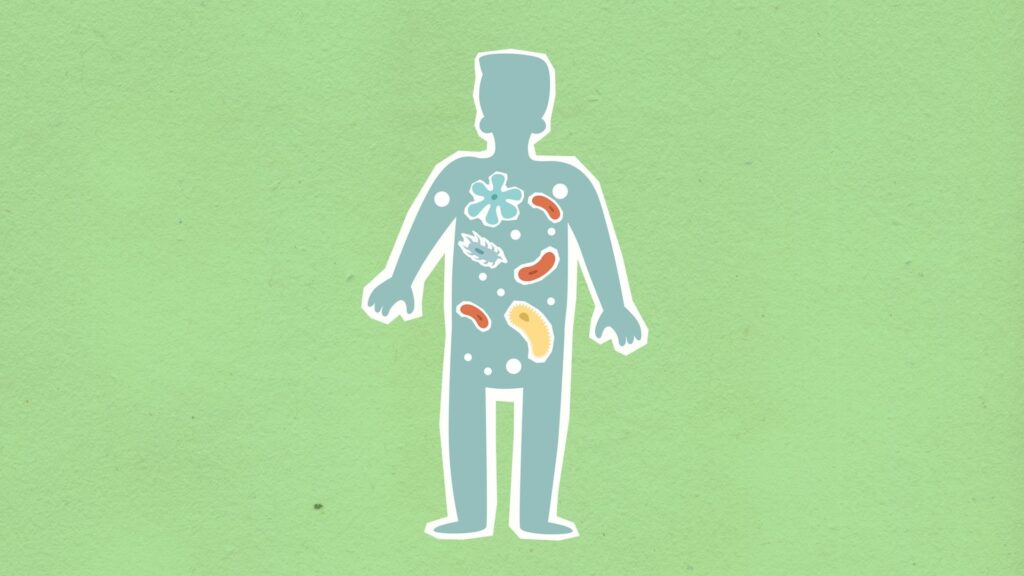
Think of autophagy as a recycling system operating inside cells.
Cells contain proteins, organelles, and other components that can become damaged or unnecessary. Autophagy allows cells to break down and recycle some of this material.
The process had been observed long before Yoshinori Ohsumi’s work, but scientists didn’t fully understand the mechanisms controlling it.
That changed through Ohsumi’s experiments using baker’s yeast. His research identified genes essential to autophagy and helped explain the machinery behind the process.
In 2016, Ohsumi received the Nobel Prize in Physiology or Medicine for his discoveries of mechanisms for autophagy.
The Nobel Assembly explains that autophagy is important when cells need to degrade and recycle components and that it plays a role in the cellular response to starvation and other forms of stress.
That last point is one reason Ohsumi’s name has become so closely associated online with fasting.
But there’s an important distinction.
Ohsumi discovered fundamental mechanisms controlling autophagy. He did not win the Nobel Prize for developing an intermittent fasting diet.
Yoshinori Ohsumi, Fasting and Autophagy Explained
Fasting is frequently discussed alongside Yoshinori Ohsumi because nutrient deprivation is one of the conditions associated with autophagy.
When nutrients become scarce, cells need alternative ways to obtain energy and building materials. Recycling cellular components through autophagy can contribute to that response.
Research reviews have found that fasting and calorie restriction can influence autophagy. However, much of the detailed mechanistic evidence comes from cells and animal models, and translating this into an exact fasting duration for humans isn’t straightforward.
A human fasting study led by Dr. Takayuki Teruya at the Okinawa Institute of Science and Technology also found significant metabolic changes during fasting. Researchers observed changes in metabolites associated with antioxidant activity and other metabolic processes.
However, the study involved only four fasting participants, so it shouldn’t be interpreted as proof that fasting makes people live longer.
Also See: These 6 Foods Will Burn Fat and Heal Your Body, Says a Fasting and Nutrition Expert
Does Autophagy Start After 12 or 16 Hours of Fasting?
You’ll often see claims online that autophagy “switches on” after exactly 12, 16, 18, or 24 hours without food.
Human biology isn’t that simple.
Autophagy is an ongoing cellular process, and its activity can vary depending on tissue, nutrient availability, energy status, and other factors. Current evidence doesn’t establish one universal number of fasting hours at which everyone’s body suddenly enters “autophagy mode.”
That’s why Ohsumi’s research shouldn’t be reduced to a rule such as “fast for 16 hours and autophagy starts.”
What Is the Yoshinori Ohsumi Diet?
There is no official Yoshinori Ohsumi diet established by his Nobel Prize-winning research.
This is one of the biggest misconceptions surrounding his work.
Ohsumi is a cell biologist. His famous experiments investigated the mechanisms controlling autophagy, initially using yeast cells. They weren’t clinical trials testing a particular diet in humans.
So why do people search for the “Dr. Ohsumi diet”?
It’s largely because Ohsumi’s research showed how important autophagy is during starvation and other cellular stresses. As interest in intermittent fasting grew, his discoveries increasingly became associated with fasting diets online.
That doesn’t mean Ohsumi created the 16:8 diet, OMAD, or another popular intermittent fasting schedule.
A more accurate takeaway from his research is simple: nutrient availability and cellular recycling are biologically connected, and Ohsumi helped scientists understand the machinery that makes that recycling possible.
What Is Dr. Ohsumi’s “Okinawa Ritual”?
Another increasingly popular search is for Dr. Ohsumi’s ritual or Dr. Ohsumi’s Okinawa ritual.
These phrases can be misleading.
Yoshinori Ohsumi’s Nobel Prize-winning research did not establish a specific Okinawan morning ritual, quick anti-aging trick, or secret daily routine.
There is a genuine scientific interest in Okinawan longevity, however, and that’s likely one reason the ideas have become mixed together online.
Okinawa has long attracted researchers studying healthy aging. The traditional Okinawan diet historically included plenty of vegetables and other plant foods and relatively low caloric intake.
Okinawan culture is also associated with Hara Hachi Bu, the practice of stopping eating before becoming completely full.
Those are interesting longevity topics in their own right. But they shouldn’t automatically be described as a “Dr. Ohsumi ritual.”
Did Dr. Ohsumi Recommend Specific Ingredients or a Recipe?
Searches for Dr. Ohsumi ingredients, an “Ohsumi recipe,” and supposed Okinawa ritual ingredients have also appeared online.
But there isn’t an established Dr. Ohsumi ingredients list in the research for which he received the Nobel Prize.
His experiments investigated cellular mechanisms rather than creating a food recipe.
Foods such as green tea, turmeric, berries, mushrooms, nuts, vegetables, and fermented foods often appear in discussions about Japanese diets, healthy aging, antioxidants, and cellular health.
That doesn’t make them ingredients in a diet or recipe created by Yoshinori Ohsumi.
It’s worth making that distinction whenever you see a viral claim connecting a particular recipe directly to his Nobel Prize.
Japanese Eating Habits Associated With Longevity
Ohsumi’s laboratory research and traditional Japanese eating habits are different topics, but there are several Japanese practices that researchers have studied in relation to healthy aging.
One of the best known comes from Okinawa.
1. Practice Hara Hachi Bu — Stop at 80% Full
Hara Hachi Bu is traditionally associated with Okinawa and roughly means eating until you’re about 80% full.
Instead of continuing until you feel stuffed, the idea is to stop eating when you’re comfortably satisfied.
Researchers studying traditional Okinawan diets have noted relatively low caloric intake alongside high nutritional quality as one possible factor associated with the population’s historically notable longevity.
That doesn’t mean eating to exactly 80% fullness guarantees a longer life. It is better understood as a form of mindful portion control.
How to try it:
Eat slowly and pay attention to hunger and fullness cues. Instead of automatically finishing everything on your plate, give yourself time to notice when you’re comfortably satisfied.
2. Leaving Time Between Meals
You don’t necessarily need an extreme fasting routine to leave longer periods without eating.
Some people use time-restricted eating, where meals are consumed within a defined daily window.
Intermittent fasting has been studied for effects on body weight and cardiometabolic markers, and fasting is also being investigated in relation to cellular pathways including autophagy.
But longer fasting isn’t automatically better, and fasting isn’t appropriate for everyone.
3. Focus on Plant-Rich Foods

Traditional Japanese and Okinawan eating patterns contain many plant foods, although diets vary considerably by region and generation.
Vegetables, soy foods, sea vegetables, tea, and fermented foods are common examples associated with traditional Japanese eating patterns.
Rather than looking for one miracle ingredient, overall dietary patterns are likely more meaningful.
Dr. Yumi Ishihara’s Modified Fasting Approach
Dr. Yumi Ishihara has promoted a modified fasting approach involving lighter food intake during part of the day.
His approach has included ideas such as:
- Starting the day with drinks such as carrot or apple juice
- Having a very light lunch or tea with ginger
- Eating the main solid meal later in the day
This creates a relatively long period with little solid food.
However, this should be understood as Ishihara’s dietary approach rather than Yoshinori Ohsumi’s diet, and it shouldn’t be treated as a requirement for activating autophagy.
Related: I Avoid These 5 Foods & My Body Feels 30 Years Younger, Says a Harvard Genetics Professor
Dr. Hiromi Shinya’s Dietary Approach
Dr. Hiromi Shinya, a Japanese gastroenterologist, has also promoted a diet emphasizing plant foods and limiting heavily processed foods.
His recommendations have included:
- Vegetables and fruits
- Whole grains
- Fermented foods such as miso and natto
- Water
- Green tea
- Lower intake of heavily processed foods
Some of Shinya’s broader health theories remain his own dietary views rather than established scientific consensus, so they shouldn’t be confused with Ohsumi’s Nobel-winning autophagy research.
Foods and Compounds Studied in Relation to Autophagy
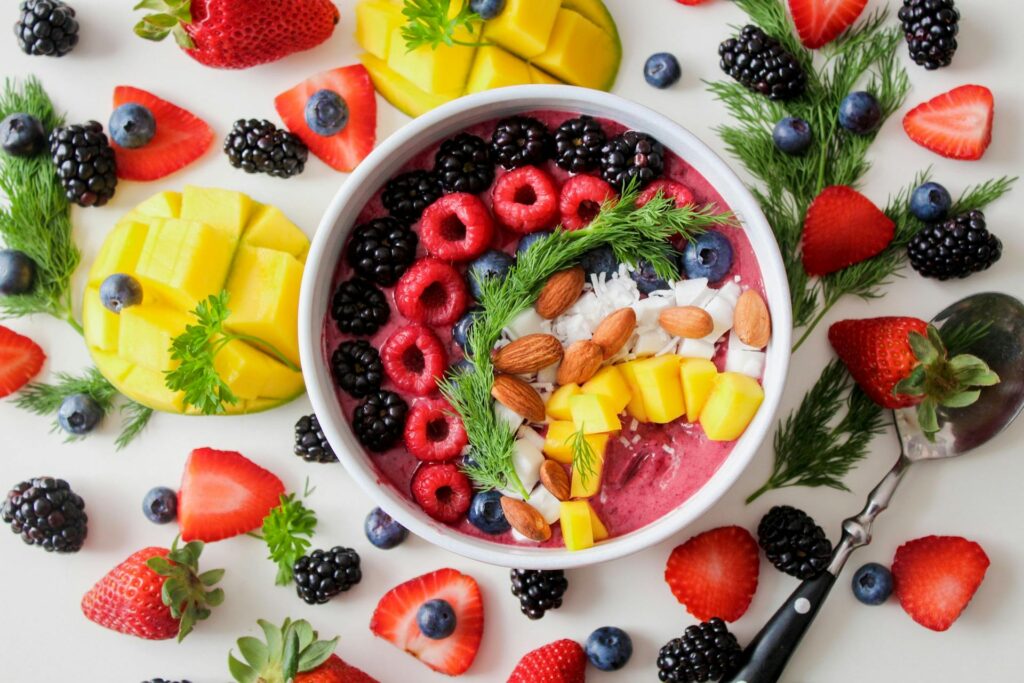
No single food can be described as an “autophagy switch.”
However, researchers have investigated several naturally occurring compounds for their potential effects on cellular pathways associated with autophagy.
Food
Compound
Why Researchers Study It
Green tea
EGCG
Studied for antioxidant activity and cellular signaling
Red grapes, berries
Resveratrol
Studied in pathways related to cellular stress and metabolism
Turmeric
Curcumin
Investigated for anti-inflammatory and cellular signaling effects
Mushrooms, nuts, soy
Spermidine
Studied for its relationship with autophagy and healthy aging
Onions, apples
Quercetin
Studied for antioxidant effects and cellular stress
Garlic
Organosulfur compounds
Studied for antioxidant and cellular effects
Broccoli
Sulforaphane
Investigated for cellular stress-response pathways
This doesn’t mean eating one of these foods will immediately “activate autophagy.” Much of the research involves laboratory or animal models, different doses, and specific biological conditions.
For everyday nutrition, it’s more useful to think about an overall balanced dietary pattern than to chase one supposed autophagy superfood.
What Ohsumi’s Nobel Prize Actually Proved
There is a simple way to separate the science from the internet claims.
What Yoshinori Ohsumi discovered: He identified key genes and mechanisms involved in autophagy, helping scientists understand how cells degrade and recycle their own components.
What he received the Nobel Prize for: “Discoveries of mechanisms for autophagy.”
What his Nobel-winning research did NOT establish: It did not create a Yoshinori Ohsumi diet, a four-ingredient Okinawa recipe, a 10-second morning ritual, or a universal fasting schedule for humans.
His work was fundamental biology, and its importance goes far beyond dieting.
It opened the door for researchers to investigate how autophagy relates to starvation, cellular stress, aging, infection, disease, metabolism, and other biological processes.
What Can We Actually Learn From Japanese Longevity?
There isn’t one food, fasting schedule, or secret Japanese ritual that guarantees a longer life.
Traditional Japanese eating patterns, portion control, physical activity, genetics, healthcare, and other lifestyle factors can all influence health and longevity.
Ohsumi’s research gives us something different: a better understanding of the remarkable recycling system operating inside our cells.
For everyday health, the practical takeaway is much simpler. Focus on a balanced diet, eat plenty of nutrient-rich foods, avoid routinely overeating, and choose habits you can maintain long term.
If you’re considering prolonged fasting or a major change to your diet, especially if you have a medical condition or take medication, talk with a qualified healthcare professional first.
Frequently Asked Questions
What is the Yoshinori Ohsumi diet?
There isn’t an official diet created by Ohsumi. His Nobel-winning work concerned the mechanisms of autophagy rather than a particular eating plan.
Did Yoshinori Ohsumi recommend fasting?
Ohsumi’s research helped explain autophagy, including cellular responses associated with nutrient deprivation, but his Nobel work should not be interpreted as a specific human fasting prescription.
What is Dr. Ohsumi’s ritual?
Online searches often use this term for supposed fasting or Okinawan longevity routines. Ohsumi’s Nobel-winning research itself did not establish a specific daily ritual.
What are Dr. Ohsumi’s Okinawa ritual ingredients?
There isn’t an established ingredient list from Ohsumi’s Nobel research. Claims about a particular four-ingredient recipe should therefore be treated separately from his scientific discoveries.
Who is Dr. Yoshinori Ohsumi?
Yoshinori Ohsumi is a Japanese cell biologist who received the 2016 Nobel Prize in Physiology or Medicine for discoveries concerning the mechanisms of autophagy.
What is autophagy?
Autophagy is a cellular degradation and recycling process through which cells break down and reuse cellular components.
Did Yoshinori Ohsumi win a Nobel Prize for fasting?
No. He received the Nobel Prize for discoveries concerning the mechanisms of autophagy, not for inventing intermittent fasting or a particular diet.