The first thing I noticed while shopping for a pull-up bar was how many of them seemed designed with the average user in mind. That’s fine until body weight becomes one of the biggest factors in deciding whether a piece of equipment is actually safe and comfortable to use.
So I started looking more closely. How much weight can the bar really support? Is the stated capacity enough for dynamic movements? Does the mounting system feel reliable? And which features actually matter when looking for the best pull up bar for heavy person?
After comparing different types and designs, I realised that choosing a heavy-duty pull-up bar isn’t just about finding the highest weight rating. A good option needs to feel solid, fit the intended setup, and inspire confidence every time it is used.
Best Pull Up Bar for Heavy Person: Top Picks
A higher weight capacity is a good starting point, but it isn’t the only thing that matters. These picks were selected based on factors such as build quality, weight capacity, installation, grip options, and overall stability.
1. KAKICLAY Multi-Grip Pull Up Bar

The KAKICLAY Multi-Grip Pull Up Bar felt impressively solid during testing, especially considering it’s a doorway model.
The 440-pound weight capacity immediately caught our attention, but the build quality is what really stood out.
The thicker bar and soft foam grips made longer sets more comfortable, while the angled grips offered several hand positions without feeling awkward.
We also liked the silicone door protectors, which helped the bar sit securely without leaving obvious marks on the frame.
The foldable design was another practical touch, making it easy to store after a workout. The included suspension straps add even more versatility for home training.
Just make sure the doorway falls within the specified dimensions and has a sturdy frame before installation.
Overall, it’s a well-rounded choice for heavier users looking for a versatile pull-up bar.
2. SERTT Foldable Power Tower Dip Station

The SERTT Foldable Power Tower is a different proposition from a typical doorway pull-up bar, and we liked the extra freedom it offered during testing.
Its 440-pound capacity and thick steel frame made it feel reassuringly sturdy, while the triangular base provided good stability during pull-ups and dips.
The 10 height settings also made it easy to find a comfortable position, and the five pull-up grips gave us plenty of ways to vary our workouts.
We particularly liked the tool-free dip and push-up handle adjustments, which made switching between exercises quick and straightforward.
Despite its substantial frame, the tower folds flat for easier storage, which is useful in a home gym where floor space matters.
With support for pull-ups, dips, knee raises, push-ups, and inverted rows, it works well as an all-in-one strength station for heavier users.
3. Sportneer Pull Up Bar for Doorway

The Sportneer Pull Up Bar impressed us with how secure it felt once properly installed.
The no-drill setup is convenient, and the dual gear locking system gave the bar a reassuringly firm hold during workouts.
We also liked the large PVC anti-slip pads, which helped distribute pressure across the door frame.
The adjustable 29.5- to 37-inch width makes it fairly versatile, although measuring the doorway beforehand is essential.
The integrated cotton grip felt comfortable in the hands and offered enough room for different exercises.
While the product is marketed with a 440-pound capacity, the manual specifies a 297-pound maximum load, so that is the figure that should guide actual use.
The bar is specifically intended for solid wood door frames, which is another important consideration.
For heavier users with a suitable doorway, it offers a sturdy, space-saving setup without permanent drilling.
4. K KiNGKANG Power Tower

The K KiNGKANG Power Tower feels more like a compact home gym station than a basic pull-up bar.
During testing, the widened H-shaped base and four suction-cup feet felt reassuringly stable, even during pull-ups and hanging movements.
The 400-pound weight capacity also suits heavier users, and the six height settings make it easy to find a comfortable setup.
We particularly liked the thick PU leather padding around the elbows and back, which made dips and leg raises more comfortable during longer sessions.
The tower supports plenty of exercises beyond pull-ups, including dips, push-ups, and hanging leg raises, so it can cover a full upper-body and core workout without needing several separate pieces of equipment.
Its footprint is still fairly manageable for a home gym, making it a practical choice when floor space is limited.
Check out: Best Compact Leg Press Machine for Home Gym
5. LIONSCOOL Multifunctional Wall Mounted Pull Up Bar

The LIONSCOOL Multifunctional Wall Mounted Pull Up Bar stood out as one of the more versatile options we tried.
The 450-pound weight capacity gives it plenty of room for heavier users, but the real advantage is the integrated pulley system.
We could move beyond standard pull-ups and chin-ups to exercises such as lat pulldowns, tricep pushdowns, and cable flys without adding another large piece of equipment.
The multiple grip positions also made it easy to vary hand placement, while the diamond knurling provided a secure feel during sweaty sets.
The included loading pins, straight bar, rope, and cable handles add even more flexibility to the setup.
Installation does require more commitment than a doorway bar, though. A solid brick or concrete wall is recommended, so checking the mounting surface beforehand is essential.
Once properly installed, it feels like a capable, heavy-duty home gym station!
Buying Guide: What to Look for in a Pull-Up Bar for Heavy Users
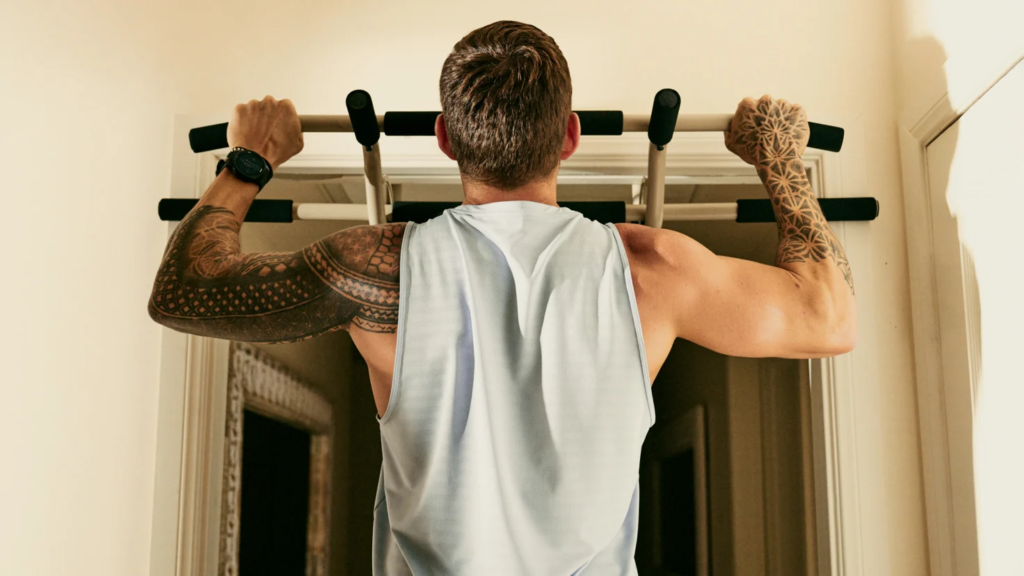
Shopping for a pull-up bar gets a little more serious when weight capacity is a key consideration. Start with the actual load rating, but don’t stop there. A sturdy frame, reliable locking or mounting system, and a stable base can make just as much difference during a workout.
The type of bar matters too. Doorway models are convenient and easy to store, while power towers offer more stability and exercise options. Wall-mounted bars tend to provide the most permanent setup but need a suitable mounting surface.
It’s also worth checking the fit and dimensions before buying. For doorway bars, measure the frame carefully. For power towers, consider both ceiling height and available floor space.
Finally, look at grip positions, padding, and adjustability. Small comfort features can make a surprisingly big difference when workouts become longer or more demanding.
Also Read: Best Pull-Up Bars for Wide Doorways
Frequently Asked Questions
What is the best pull up bar for a heavy person?
The best pull-up bar for a heavy person should have a suitable weight capacity, sturdy construction, and a reliable mounting or support system. Doorway bars work well for convenience, while power towers and wall-mounted models generally offer more stability.
How much weight should a pull-up bar support?
A pull-up bar for heavy users should have a weight rating that comfortably exceeds the intended user weight. Always follow the manufacturer’s stated maximum load rather than relying on advertised test or breaking loads.
Are doorway pull-up bars safe for heavy people?
They can be, provided the bar is correctly installed and the door frame is strong enough to support it. Check the manufacturer’s weight limit and doorway measurements carefully before using a doorway pull-up bar.
Are wall-mounted pull-up bars better for heavy users?
Wall-mounted pull-up bars can provide a very stable setup when properly secured to a suitable wall. Solid brick or concrete is generally preferable, while drywall may require additional structural support depending on the product.
What should be considered when choosing a heavy-duty pull-up bar?
Look at weight capacity, construction, mounting method, stability, grip options, and dimensions. For heavier users, the quality of the frame and support system is particularly important.
Can a 400 lb person use a pull-up bar?
It depends entirely on the product’s rated capacity and installation requirements. A pull-up bar rated for 400 pounds may support a user at that weight, but the manufacturer’s instructions and maximum load should always take priority.
What is the difference between a pull-up bar and a power tower?
A pull-up bar is primarily designed for pull-ups and chin-ups, while a power tower combines pull-up functionality with exercises such as dips, push-ups, and hanging leg raises. For a home gym, a power tower can provide considerably more exercise variety.
What weight capacity should a heavy-duty pull-up bar have?
There is no single capacity that suits every user. A heavy-duty pull-up bar should have a clearly stated load rating appropriate for the intended workout and should be installed exactly as recommended by the manufacturer.
Final Verdict
After trying these different setups, one thing became clear: a good pull-up bar should never leave a question mark in the back of the mind. The right one feels solid, comfortable, and dependable from the first rep.
For heavier users, that extra sense of stability matters even more. Among these picks, there’s a good option for almost every home gym setup, whether space is tight or a more permanent station is preferred.